Sunday, 27 April 2014

27 April 2014

A very interesting article from the always erudite Mark Lawson

For the original article click here

British TV is learning to love the arts – but it can love them too much

TV's new passion for the arts should be good news for culture enthusiasts. But are critical voices being drowned out by applause?

Gemma Arterton in the Globe theatre's production of The Duchess Of Malfi
Gemma Arterton in the Globe theatre's production of The Duchess Of Malfi, which is to be screened on BBC TV. Photograph: Tristram Kenton for the Guardian
In the history of television, the areas of British life that have most regularly complained about the lack – and, in recent times, reduction – of airtime are religion and the arts. But, while bishops may still be bitter, artists now seem to have cause to applaud. This week Channel 4 announced a large increase in its arts programming, just over a month after BBC director general Tony Hall revealed the ambition to put arts "at the heart" of the schedules.
The broadcasters will hope for an unreserved cheer from producers and consumers of culture, but there is reason for concern that the type and tone of coverage being promoted may prove rather more beneficial to the creators of the arts than to those who have to pay to see them.
Channel 4's new commissions include, for example, Random Acts, a showcase for short films by visual artists and film-makers, which is a collaboration with Arts Council England (Ace), an organisation that also featured in the BBC plans, as co-funder and co-producer of The Space, a website on which, again, brief films will be screened.
These cases of Ace teaming up with TV are examples of the current fashion in cultural broadcasting for "creative partnerships". The BBC has announced co-productions with institutions including the National Portrait Gallery, Tate Britain and the National Galleries of Scotland. The biannual Manchester international festival will become another "creative partner", with its director, Alex Poots, becoming one of a number of creative figures who will advise the BBC on its coverage. Sir Nicholas Hytner(National Theatre boss until March next year) has joined the BBC's board as a non-executive director, with Sir Nicholas Serota, head of Tate, chairing a separate "sounding board" of arts supremos.
The fact that almost all these new projects involve actual or virtual art galleries – with Channel 4 commissioning, as well as Random Acts, a series on modern portraiture – has revived complaints about the tendency of arts coverage on television to favour the visual arts over other disciplines. But while it understandably annoys literature and theatre, this bias is less ideological than technological: a picture, sculpture or photograph can be represented on screen more or less as it looks to a gallery-goer, so the viewer can see exactly what is being discussed. In contrast, any programme dealing with a book or play is able to give only a hint – through a brief reading or dramatisation – of the material being featured.
This structural difficulty explains the lack of any dedicated theatre or books programmes on British TV, a frequent cause of lament from fans of those arts. Although it should not be forgotten that the most enduring and successful arts programme of modern times – Melvyn Bragg's The South Bank Show, which ran on ITV between 1978 and 2010, and has now been revived by Sky Arts – managed to cover all of the artistic disciplines in rotation, through interviews or documentaries.
Interviewing and film-making, however, are acts of mediation, and potentially of criticism. The biggest concern about the new generation of arts shows proposed by Channel 4 and the BBC is not just the preference for pictorial forms, but that they seem to offer the TV screen as an annexe to the art gallery, with external curators having at least as much power as internal producers.
Some pundits have pointed to the apparent paradox that the BBC's commitment to more cultural coverage was bracketed by the reduction or removal of long-running arts programmes. Twenty years after it began as Late Review, The Review Show was cancelled last month without fanfare, just weeks after Radio 3's Nightwaves was cut from four nights to three and renamed Freethinking to reflect a more generally intellectual rather than specifically artistic brief.
One of the BBC's senior managers recently told a meeting: "We don't want arts programmes that say: 'Should you see this?'; we want programmes that say: 'You should see this.'" This small reversal of words reveals a large and significant shift of intention.
Over its two decades, the Review studio was known for often witheringly direct dismissal of the work under discussion; there are still writers and artists whom I would fear meeting on a dark night after critiques they received on editions I chaired. Judgment was also a key element of Nightwaves, which would often make a noisy point about featuring first-night reviews of London theatre productions.
Now, though, there are strong suspicions that broadcasters are less interested in reviewing plays than in co-producing them: another of the recently announced BBC initiatives promises to screen "the best of British theatre". There is a sense of editorial energy moving, in footballing terms, from the press box to the terraces.
And sporting metaphors are apt. When announcing that the BBC arts brand would be given greater prominence in the credits of programmes, executives acknowledged that they were following the example of the sports department, which closes each transmission with a lingering picture of its logo. And the arts/sports comparison has frequently been made over the years by members of the cultural community. "Why can't television support arts in the way that it does sport?" curators and artistic directors would plead.
But this analogy is problematic. Although propagandists for more arts on television often talk of TV "promoting" or "getting behind" sport, the coverage of football in particular has become progressively more analytical. Pundits on Match of the Day were encouraged to be more critical of players and referees, while, on Radio 5 Live's after-match phone-in 606, it is almost unknown for managers or officials to be praised. If arts broadcasting were truly to become more like sport, there would be regular shows in which punters shouted that "Damien Hirst is a total waste of money," or "David Hare was just diabolical tonight".

'The South Bank Show Revistited'   TV
Melvyn Bragg with David Hockney on The South Bank Show, which has moved from ITV to Sky. Photograph: ITV/Rex
There is also, though, another intriguing connection. BBC sport began its policy of aggressive branding at a time when the corporation was rapidly losing attractions (cricket, rugby, live football) to rival bidders, especially Sky. So the self-advertisement was that of a rapidly shrinking man frantically measuring his remaining height.
In the same way, the pumped-up budgets and publicity for culture at Channel 4 and the BBC reflect a fear that artists and the big national institutions have alternative outlets. Digital democracy means that creators and curators can easily make their work available on-screen without the intervention of TV networks. So provision of platforms for visual artists – in Random Acts and The Space – can be seen as a hedge against that trend, while collaborating with the National Portrait Gallery for series fronted by Grayson Perry (Channel 4) and Simon Schama (BBC) may delay a future in which the NPG itself produces and distributes such projects.
Live drama already demonstrates television's loss of a screening monopoly. Last year's Globe theatre production of The Duchess of Malfiwas not regarded by most reviewers as one of the highest achievements of British theatre; and, as its main design feature was being lit by candles, it does not seem obviously suited to TV transmission. However, the BBC has chosen to broadcast it. One reason for this is that the biggest hits of the National, Royal Shakespeare Company and the West End during that period – such Helen Mirren in The Audience and David Tennant's Richard II – were screened in cinemas as part of the NT Live project pioneered by the National. Those shows neither needed nor wanted TV. Meanwhile, galleries, including the British Museum and Tate, have started transmitting guided tours of new exhibitions into cinemas and online.
Perhaps the BBC's new tranche of "creative partners" could advise on this contest for content? Or can they? Under a strict reading of the BBC's conflict of interest rules, future work produced by either Hytner or Serota should not be reviewed or broadcast by the BBC. To invoke again the sporting comparison, it is hard to imagine Manchester United boss David Moyes being appointed as a non-executive director of the BBC to supervise football coverage, or West Ham's Sam Allardyce becoming a "sounding board" for the makers of Match of the Day.
Several newspaper journalists – including Richard Brooks in the Sunday Times and the Evening Standard's Anne McElvoy – have expressed concern that arts television will become an electronic stage for the UK's cultural producers rather than a journalistic scrutineer in the way that it operates towards, say, politics or business. And the Channel 4 plans seem, on paper, to continue a move from mediation to presentation.
Certainly, whether or not this was the intention, the cancellation of The Review Show spares the BBC the difficulty of having to explain to "creative partner" Alex Poots why Paul Morley or Julie Myerson has just said on television that a production at the Manchester international festival was a "waste of time". There is a danger that, in TV arts coverage, criticism is being downgraded in favour of uncritical jingoism.

Tuesday, 22 April 2014

30th MARCH 2014

A long three week trip to the USA. As I head back to Atlanta airport to head home, it seems an absolute age since I boarded the plane to come out to LA on the 6th March…but let’s go back to the start:

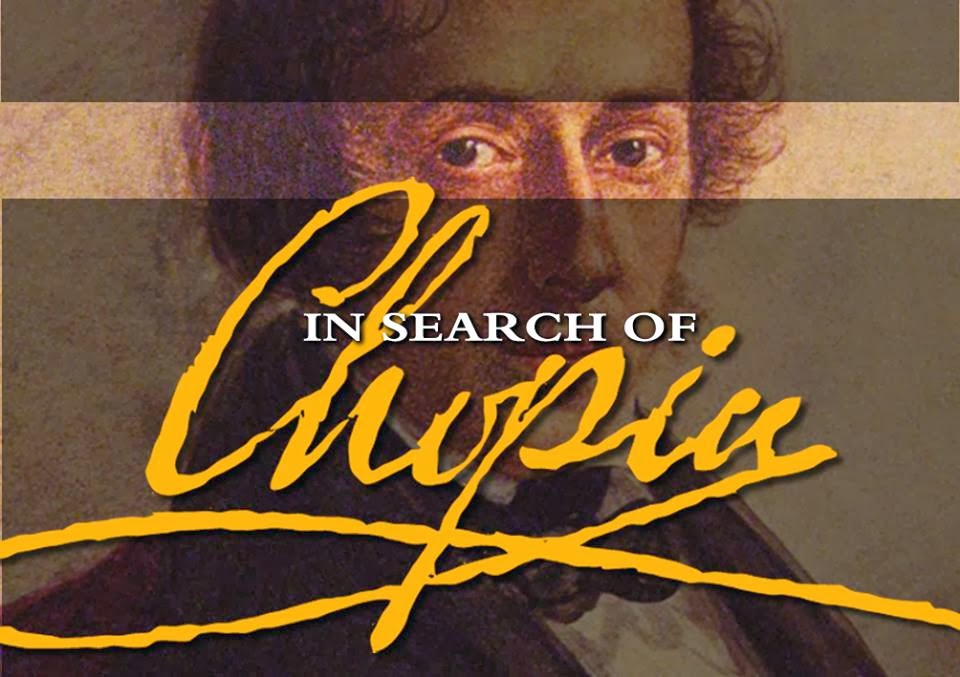
…6th March and I am heading to Los Angeles for meetings regarding the next run of films for EXHIBITION ON SCREEN.  I am also heading there for some early press work on IN SEARCH OF CHOPIN.  At Heathrow I was delighted to be told I was on the Upper Deck of my BA flight to Los Angeles that I was then confused, on boarding, when there were no stairs to climb….Doh! This was a new Airbus A380 – with its two decks.   Anyway, I wasn’t in need of a bed as I had lots of work to do. I was feeling kind of pleased with myself until I realised the guy in front had been on his Mac revising a contract also for 6 hours straight.  That is some kind of concentration.  Goes to show that however hard you work there’s always someone else working harder…   That said, the past few weeks and months for me have been – and sorry to my regular blog readers as you’ve read this before – as busy. This really is an intense period in my life.  Previous major TV series were exhausting - In the Shadow of the Sun was tough. I Caesar took me to the absolute limit. Escapefrom Luanda was a chore – but nowadays it’s a full time job raising the funds and another full time job contracting and another full time job marketing….all that as well as researching, writing, filming and editing.   Still, the days may be very long right now but at least it involves a lot of researching great art.   

Time for a brief update: where is the good ship Seventh Art sailing these days?   As those of you who read my blogs know, we have just finished IN SEARCH OF CHOPIN and it has its world premiere in New Zealand in a few weeks, then Hungary, Australia, USA, Canada….I have also been continuing the project with Leif Ove Andsnes – we had our first sit-down to look at an edit the other day and it went really well – though I admit we spent as much time discussing whether Man City, Chelsea or Liverpool would win the league.   Leif Ove is on tour in the US now and this is the type of review he has been getting time & again:
Leif Ove Andsnes at Carnegie Hall, Part of a 19-CityTour

By ANTHONY TOMMASINI (New York Times)

Many young virtuoso pianists perform the Beethoven sonatas as a demonstration of their musical depth. But when he emerged as a major young artist, the Norwegian pianist Leif Ove Andsnes avoided Beethoven. He thought he should wait until he had “something to say,” as he explained in 2012 in an appearance on WQXR and WNYC radio studios. Well, Mr. Andsnes, 43, is certainly making up for lost time. He is in the midst of what he calls, perhaps too grandly, “The Beethoven Journey,” a multiyear immersion in the master’s works. For its main project, he is recording and performing the five Beethoven piano concertos with the Mahler Chamber Orchestra, directing the ensemble from the keyboard. The second CD in this series was just released by Sony Classical, with superb accounts of the Second and Fourth Concertos. On Wednesday night, Mr. Andsnes performed a Beethoven recital at Carnegie Hall, one stop in a 19-city tour. The hall was nearly full for an evening that included only one of the popular sonatas with titles attached, the “Appassionata.” Mr. Andsnes began with the Sonata No. 11 in B flat (Op. 22), an overlooked work considered the last of Beethoven’s early-period sonatas. Its musical materials seem almost intentionally ordinary, with a crisp opening theme that leads to a nothing-special melody over a rippling accompaniment. But it’s what Beethoven does with such elements throughout the work that is so extraordinary. In his Apollonian approach to the piece, Mr. Andsnes brought out the surprising wildness and strangeness of the music. His performance had me recalling comments he made at the Greene Space. When asked why he had avoided Beethoven, Mr. Andsnes said that “pianistically” the music did “not have obvious sensual qualities” of works by Chopin, Schumann, Janacek, Grieg and Rachmaninoff. Well, from his playing on Wednesday, Mr. Andsnes has definitely found ways to connect with Beethoven’s pianistic sensuality. In the first movement of the Sonata No. 11, he brought milky textures and alluring colorings to bursts of undulant figures in the bass and stretches of passagework in the mercurial development. In the finale, each time the beguiling rondo theme returns, Beethoven makes it more elaborate and playful, qualities Mr. Andsnes conveyed with wondrous nuance and detail, while maintaining cool, almost sly control. He then turned to a late work, the Sonata No. 28 in A (Op. 101), giving a noble and beautifully natural performance of a deceptively complex score, which ends with a joyous yet knotty fugue. After intermission, he offered an exquisite account of Six Variations on an Original Theme in F. The “Appassionata,” the Sonata No. 23 in F minor, is a touchstone of Beethoven’s middle period. Many pianists make the most of the music’s stormy contrasts and intensity. Mr. Andsnes’s more magisterial interpretation allowed every stark element to come through while enhancing the dramatic sweep, especially during his uncannily controlled account of the onrushing finale. In response to a standing ovation, Mr. Andsnes performed three encores: an impish Beethoven bagatelle; the perpetual-motion finale movement of Beethoven’s Sonata No. 22 in F; and, for a change, the last of Schubert’s “Moments Musicaux,” played with beguiling tenderness.


My film on Leif Ove will be on BBC4 in 2015 but it’s the exception not the rule.  TV in the UK continues to be a mess: BBC4 doesn’t have a controller, BBC 3 is going on-line only. SkyArts hasn’t recovered from the impact on Sky generally of higher prices for soccer caused by their own sky-high fees they pay being topped by even higher fees (hundreds of millions) by British Telecom. Sky Arts’ boss James Hunt has moved on.  Channel 4 lost their arts comm ed Tabitha Jackson a while ago and may well have no arts policy at all for all I can see. ITV does Perspectives – celebrities on artists.  Radio is the best place for the arts but I was disappointed to read that Mark Lawson has quit Front Row, allegedly for bullying (and I really admire Front Row and Mark Lawson’s knowledge) but bullying is certainly rife in broadcasting.  Such a shame.  While I’ve been travelling in the USA the Director General of the BBC made a speech about increasing their arts output.  I’m delighted it’s back on the agenda and felt to be worthy of a ‘big speech’.  They’d abandoned the arts a decade ago so this is a welcome U-turn.  The only criticism I’d make is that they always play it so safe: everything with presenters, opera from London, Shakespeare, etc.  They don’t exist in the same commercial sphere as me or Sky Arts so the BBC is the one place where you should be able to experiment with new ideas, less white-middle-class-male-London-centric art, even make some films that are themselves works of art.  It has to be repeated though that, in my opinion, art lovers have never in history been as well served.

Talking of arts lovers, my old mate Tim Marlow has just become director of exhibitions at the Royal Academy – great news: I’m delighted for him. We’ll do less TV projects together but I know he’ll do an excellent job and welcome less travelling.

The Big Project (deservedly capitalized) continues to be EXHIBITION ON SCREEN. Hence the main reason I am en route to the USA. I have some important meetings as well as filming some interviews.  We have some big news coming up so keep an eye on the Facebook site or sign up to the newsletter.  For those of you who love art, I think you’re going to be happy with the results of our labour.

Later….much later….so here I am on the plane back to England.  Madness; where did those three weeks go?  It’s already a blur of planes, trains and automobiles.  I had some very successful screenings of Season 1 EXHIBITION ON SCREEN, great preview screenings of Chopin, and lots and lots of meetings and visits. Last, but certainly not least, I filmed some fascinating interviews for forthcoming films.  The rest of my work was scripting (and of course endless contracting) for the big film that is coming up MATISSE: LIVEFROM TATE MODERN – on June 3rd!  UK only – then to the rest of the world in October.  Now this is going to be fantastic….
 

Monday, 3 February 2014

Real Clear Arts


Yet more on cultural devastation from Judith Dobrzynski... 

Cultural Sites: Taking Stock In Syria
by Judith H. Dobrzynski

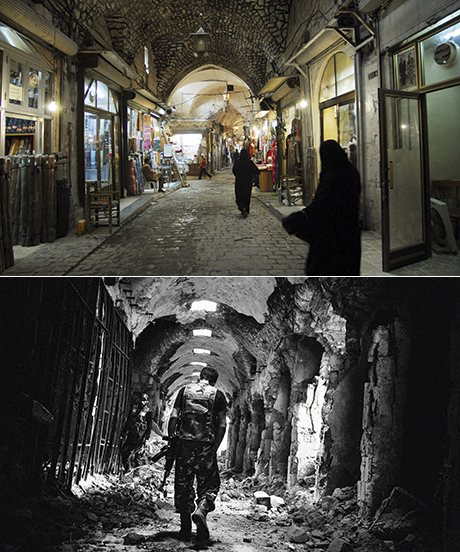
With the war in Syria continuing now for two years, with no signs of a true settlement and only minimal progress at the talks in Switzerland, The Guardian has published an update on the damage to cultural heritage that includes devastating before and after pictures.

Headline Syria's Heritage in Ruins, the article says that all six UNESCO World Heritage sites have been damaged. Specifically, it reports:

 "In Aleppo, one of the oldest covered marketplaces in the world is now in ruins; its maze of stone streets has been one of the most intense battlefields in the country for the past 18 months, bombed from above by air force jets and chipped away at ground level by close quarter battles that show no sentiment towards heritage. Those who dare raise their heads above the ruins, towards the ancient citadel that stands at the centre of the city, can also see damage to several of its walls."

"Several hundred miles south, just west of Syria's third city, Homs, one of the most important medieval castles in the world, Krak des Chevaliers, has taken an even heavier toll. Directly struck by shells fired from jets and artillery, the hilltop fortress now stands in partial ruin."

"Homs itself has fared even worse. A residential street, where cars not long ago parked under gum trees, has been destroyed. Life has ceased to function all around this part of the city, as it has in much of the heartland of the country. In one shot, a destroyed tank stands in the centre of a street. The old minaret next to it has also been blown up."

The article quotes Emma Cunliffe, a Durham University PhD student and member of the Global Heritage Network, saying "Archaeological sites in Syria are often on the front lines of conflict and are experiencing heavy damage. Economic hardship and decreased security mean even sites away from the fighting are looted. This is denying not only Syrians but the world a rich heritage which can provide a source of income and inspiration in the future."

Friday, 31 January 2014

One of so many tragedies occuring in Egypt and surrounding countries...

Have a read of Judith Dobrzynski's superb blog Real Clear Arts for a little insight:

Details on Bombing At Cairo Museum

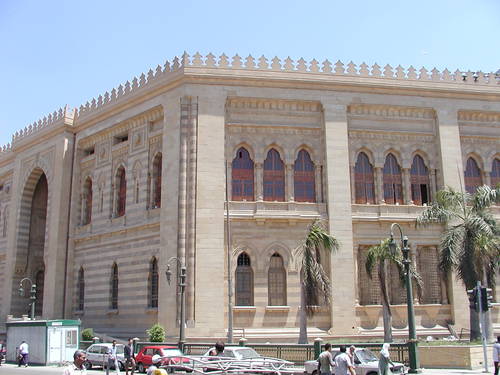
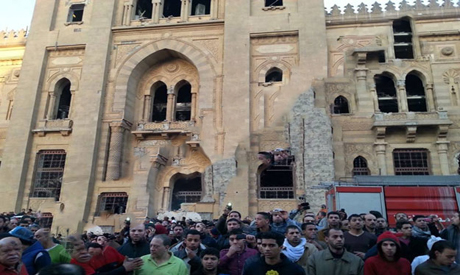
Renewed bombing in Cairo has destroyed the highly decorated facade of the Museum of Islamic Art there, and severely affected much of the art and artifacts inside. The damage occurred on Friday, when a powerful car bomb exploded in front of the adjacent headquarters of the security police, according to Ahramonline.  The bomb, which killed four people and injured dozens more, also damaged the nearby Egyptian National Library and Archives building.
OLYMPUS DIGITAL CAMERA
It’s unclear what can be salvaged inside the building, which dates to the 19th century. The collection includes wood, metal, ceramic, glass, crystal, and textiles objects “of all Islamic periods from all over the world.” Ahramonline said:
“The museum building is in a real mess,” said [Minister of State for Antiquities Mohamed] Ibrahim, describing the interior of the museum as “topsy-turvy.” According to Ibrahim, a number of ceilings inside the building collapsed, and some artefacts were damaged.
“Until now I cannot move freely inside the museum to continue my inspection tour due to safety reasons, as the ceilings are still on the verge of collapsing,” he said.
2014-635261600628407764-840
The Associated Press article dated Jan. 24 has a full report, including:
Centuries-old glass and porcelain pieces were smashed to powder, a priceless wooden prayer niche was destroyed and manuscripts were soaked by water spewing from broken pipes…
…Ceramic and Gypsum pieces dating to the Fatimid and Mamluk periods suffered the most damage, along with ancient lanterns once used in mosques during the holy month of Ramadan. Of the world’s 300 rare lanterns, the museum houses 60, and five of those were ruined, said Rafaat el-Nabarawy, an Islamic antiquities professor….
…Among other destroyed treasures, he said, were glass pieces dating back to 750, including an ornate pot of a rare type of glass believed to be pioneered by the early Egyptians.
Other priceless pieces that were damaged or destroyed included a century-old wooden niche or “mihrab” used in mosques to point to the direction of Mecca during the five daily calls to prayer. Arabic inscriptions and verses from the Quran were carved on the piece, which belonged to Ruqaya, a daughter of Ali, a successor of Prophet Muhammed…
Today, the Associated Press reported that a UNESCO team was on its way to Cairo to assess the damage. UNESCO promised $100,000 to help the museum recover.
UNESCO’s statement condemning the bombing is here.
The AP also reported that the museum “recently completed $14.4 million renovation [that] included 25 exhibition halls, as well as state-of-the-art security and lighting systems, a fully-equipped restoration laboratory, a children’s museum and a library, much of which was gutted by the blast.”
The pictures I’ve posted are before and after shots.
Photo Credits: Courtesy of UNESCO (top), of Ahramonline (bottom) 

For the original article click here

Tuesday, 28 January 2014

26th January 2014


A rather belated Happy New Year to everyone! January seems to have whizzed by and Spring is certainly just around the corner, unless you live in the many parts of the world experiencing strange weather these days. We, in the UK, have had a wet & windy time of late and there’s a good deal of flooding still around. I also feel for my many friends in the USA & Canada who have experienced some of the coldest weather in memory. It hasn’t really had much impact on me as I’ve been pretty well tied to my desk or edit suites since before Christmas. 

The good news is that yesterday we ‘Picture-Locked’ IN SEARCH OF CHOPIN. It’s been more or less a 4 year journey so to finally say ‘That’s it! No more picture editing’ is a great moment. There is still a lot to do with grading, audio mixing, subtitling and credits but I do feel a mountain has been climbed. Am I happy with it? Yes, definitely. I guess I wouldn’t have stopped editing were I not. But more than that, I admit there were times when I struggled with Chopin – it seems strange to say (after life stories like Mozart & Beethoven) but there seemed to be endless hard choices about what not to include. As ever, summarising (in an entertaining, accessible way) someone’s full and significant life in only 110 minutes is always going to be a challenge. The first good news for me is that one eminent historian of the period and a key Polish Chopin Institute have all given a full thumbs up. The Chopin Museum in Warsaw want to be able to show it regularly in their (wonderful) gallery – and actually that’s the best recommendation I could have got. The film is not yet finished but that’s a good sign. A lot of time is also being spent on sorting out the film’s distribution….and that goes well too.  We will be announcing officail release dates soon. So posters, press stills, social media and all that kind of thing are being worked on. What’s nice is those countries want to take the opportunity to reshow MOZART, HAYDN & BEETHOVEN. Well, we’ll see….let’s hope financially we can at least break even! 

 In a musical vein, I’ve been working on the other music film too which is the film about Beethoven’s 5 piano concertos – with Leif OveAndsnes and the Mahler Chamber Orchestra. Having filmed (a 5-camera shoot) two more of the concertos in Brussels recently, we had a chunk more material to start playing with ideas in the edit suite. That’s always such an exciting, important and creative moment in any film’s life… This is a film that just has to avoid me messing up. I have the best music, performed by ‘the world’s best pianist’ `(The Irish Times) and a great orchestra. I’ve been hamstrung as always by the horrors of funding but I don’t think it’s impacted on the filming or the film…So I’m getting excited about that one too (which will be released in 2015). As for EXHIBITION ON SCREEN…we’re getting lots of requests for repeat screenings (To book a screening visit seventh-art.com). More on all that another time…. One last thing, if you’re in the UK, do try to see Wolf Hall and Bring up the Bodies at Stratford – brilliant.

Monday, 2 December 2013

27 November 2013

Now this is a day I have looked forward to for some time….  I guess I have been working on the IN SEARCH OF CHOPIN script for two or three years…tweaking, amending, cutting, revising….  Sometimes weeks go by with nothing and other times it’s highly engaged and productive.  Gone are the days that one could focus on one project at a time – and the EXHIBITION ON SCREEN project has been extremely time-consuming.  But I have always had Chopin in my head and certainly in recent weeks, as the date of final narrative readings approached, my mind has been very focused on this.   It’s one thing to have a general sense of things in a script – a note-form paragraph, something roughly done, a marker.  But when you know that within days Juliet Stevenson is going to be reading the final script and David Dawson reading the letters of Chopin, there is no longer any room for inaccuracy or flaccid writing. Everything has to be precise, accurate, flowing and accessible.

On the early train to London, I make last minute changes and alterations…As I walk from Victoria Station past Buckingham Palace to the voice-over studio in Soho, I am still going over it all in my head…Every word, one has to think how will Juliet and David deliver it.  The studio is a smallish basement on Berwick Street but they’re good. Except they don’t have a printer for three 83-page scripts…Possible delay is averted though by a professional printers next door.  Juliet is first up.  What can I say about Juliet that you don’t already know?  Simply one of this country’s finest actors – as well as being smart, sensitive, gorgeous, friendly and highly professional.  Choosing her to be the narrator of Mozart was a brilliant suggestion (by a colleague of mine in 2005) and being able to use her subsequently for Beethoven, Haydn and now Chopin is simply fantastic.  She makes sentences come to life.  Any of you that listen to her audio books will know she is a born story-teller.  It only took us two hours to read the whole script…and she did it so well.   Then in came David Dawson – a brilliant actor that I first saw playing Romeo in Stratford. I thought long & hard about the right voice for Chopin and decided that David was absolutely right – not only for the skill with which he can deliver lines but the ability to carry that mix of frail body but fiercely competent and endlessly sharp intellect.

By the end of the session, I felt as close to the ‘real’ Chopin as I think I’ll ever get.  Now it’s all electronic signals on their way, via email, to my editor and into the film.  In 20 years time, there they’ll still be…..it’s done, it’s locked, any faults are mine and mine alone.   There still remain two months of finishing the film but the end is in sight….


Tuesday, 19 November 2013

Sunday 17th November 2013


Middle of November already? Really? Gee. As always, my excuse for not having blogged in a short while is my crazy schedule. It really has been crammed – and no sense of it letting up. IN SEARCH OF CHOPIN is coming to a conclusion – and looking good. We did a guide read through of narrative and Chopin’s letter’s with Juliet Stevenson and David Dawson. This is always a very exciting moment in the production process when finally I can strip my voice out and lay in a top professional’s. All of a sudden both elements come to life….The final read is on the 27th November so all hands are on deck to ensure that Mr Chopin’s life has been accurately summarised into 1 hour and 50 minutes….with no factual errors! Luckily I have four superb historical advisors who will spot any mistake…. It’s been a harder journey than I had expected – finances of course but also in terms of creativity: I feel I’m having to leave so much out – whole periods seem to have to be contained in a short example of music, a letter or two, an interview or two and a bit of narrative. But imagine if I had to make a film about your life and try to keep it in a film of under 100 or 110 minutes. So much would invariably be left out…. That’s the trick. What to keep in and how to present it in a film that folk will enjoy. I don’t want to tempt fate but I think we’ve done a good job with Fryderyk: and the performances of Leif Ove Andsnes, Lars Vogt, Ronald Brautigam, Daniel Barenboim and others are wonderful. Should be releasing to cinemas in Australia and New Zealand in May – watch this space.
Talking of Leif Ove Andsnes, tomorrow I am off to Brussels to film the next stage of my film about the 5 Beethoven piano concertos – all of which will be played in the film by this master of the piano. We’re set up to do a 5-camera shoot (on stage) including a full dress rehearsal (so I’ll have ten camera angles in the end). I’m nervous but also confident it’s going to be great. Leif Ove and the Mahler Chamber Orchestra are a formidable combination. To remind you, this is for a May 2015 release….
Meanwhile, our brand EXHIBITION ON SCREEN also keeps us busy. The film from the Vermeer exhibition at the National Gallery was very well received with screenings ongoing. Art…and art lovers, sign up to the ExhibitionOnScreen newsletter, Twitter or Facebook site to keep in touch.
This Event Cinema is such a great new genre though – the RSC Richard II was in cinemas last week and by all accounts sold out. I saw it live at Stratford two weeks ago and it is a great show. David Tennant is super. I’d have loved to see the cinema relay but was busy on Wednesday at a Brighton Film Festival event – where Benedict Cumberbatch very kindly gave me an autograph for my daughter (an aspiring actress) and hoped ‘we work together one day’. Benedict, you’ve a fan for life now (me!). Another actor I think is wonderful is Henry Goodman – I went to see his Arturo Ui show at the Duchess Theatre in London last weekend. He is a ‘tour de force’ in it. I have mixed feeling sometimes about the heightened realism or exaggeration of Brecht but I thoroughly enjoyed this show – and especially Henry. If you love acting, go see this – quick.
To end, one sad note: Antony Caro died on the 23rd October. I really liked Antony and tried hard to make a film about him – even financing some filming of an installation he was doing in France – but simply couldn’t get a broadcaster on board. And now he’s gone. A great artist. One small postscript, just for fun: if you’re looking for a musical recommendation today, how about Mozart’s K207 – violin no1 in B flat major. And, if you fancy looking at one painting today, try the Double Portrait of Constantin Huygens and Suzanna van Baerle by Jacob van Campen. At the Mauritshuis, the Hague, Netherlands. You’ll think Suzanna is sitting right next to you……